Business Waste Removal in Harrow: Efficient Solutions for Your Enterprise
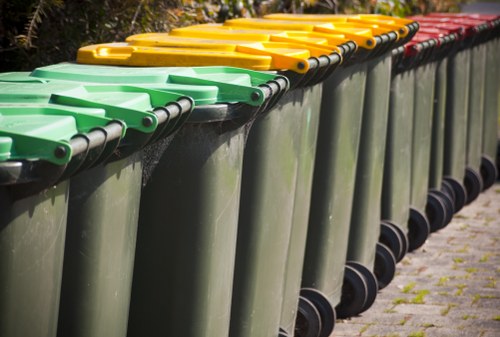
A row of large, wheeled rubbish bins aligned outdoors on a paved surface, with green, yellow, and red lids, used for segregating waste. The bins are made of durable plastic with a matte finish and are set against a backdrop of greenery. The green-lidded containers are positioned towards the front, followed by yellow lids and then red-lidded bins further back, all arranged neatly in a straight line. The black wheels at the base of each bin are visible, and the bins are placed on a concrete or tarmac pathway with some small patches of moss or grass growing between the cracks. Natural daylight illuminates the scene, emphasizing the clean, solid colours of the lids and the smooth texture of the containers. This outdoor waste disposal setup reflects typical rubbish removal practices that a company like Flat Clearance Harrow might facilitate for local businesses around Harrow and the HA postcode area, ensuring clear separation and responsible disposal of waste materials.

In the bustling area of Harrow, businesses face the ongoing challenge of managing waste effectively. With increasing regulations and the growing emphasis on sustainability, finding a reliable business waste removal service is crucial for maintaining operational efficiency and environmental responsibility.

Proper waste management not only ensures compliance with local laws but also enhances your company's reputation. By partnering with a professional waste removal provider, businesses can focus on their core activities while leaving the complexities of waste disposal to the experts.

Business waste removal encompasses the collection, transportation, and disposal of various types of waste generated by commercial enterprises. From office waste to industrial by-products, understanding the specific needs of your business is essential in selecting the right waste removal service.
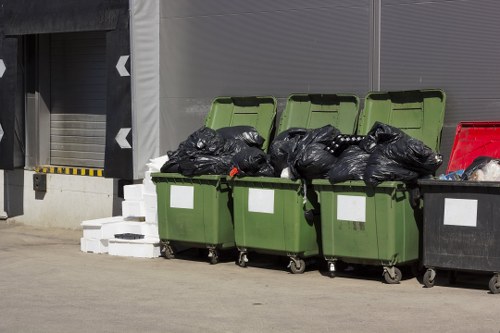
Four green wheeled rubbish bins with open lids are positioned side by side on a paved surface, with several tightly packed black rubbish bags of varying sizes and shapes stacked inside and partly spilling over. To the right, a black bin with a white label and a red lid is visible, also filled with waste. Behind the bins, a grey industrial building wall features a large metallic shutter door, partially open with white concrete blocks stacked nearby. The environment appears to be a commercial or industrial waste collection area, likely part of a local business premises, and the scene is evenly lit, suggesting daytime. The image reflects a typical rubbish removal setup, consistent with the waste management services provided by Flat Clearance Harrow, operating within the Harrow area.

###

Why Choose Professional Waste Removal Services?

Engaging a professional waste removal service offers numerous advantages for businesses in Harrow. Here are some key reasons to consider outsourcing your waste management needs:

  • Compliance: Adhering to local and national waste disposal regulations is mandatory. Professional services ensure all waste is handled in accordance with the law.
  • Efficiency: Experts have the knowledge and equipment to manage waste swiftly and effectively, reducing downtime and operational disruptions.
  • Environmental Responsibility: Sustainable waste removal practices minimize your business's environmental footprint, contributing to a greener community.
  • Cost-Effectiveness: Outsourcing waste management can be more economical than maintaining an in-house system, saving both time and resources.

By opting for a specialized waste removal provider, businesses can streamline their operations and ensure that waste is dealt with in the most efficient and responsible manner possible.

Ensuring effective waste management is not just a regulatory requirement but also a strategic business decision.
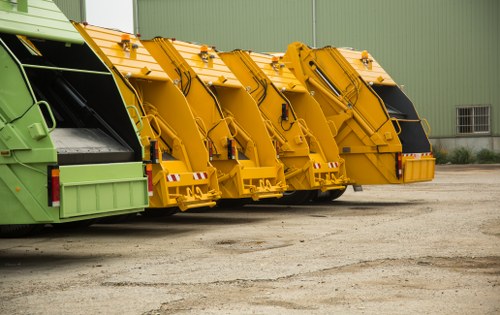
A row of four large waste collection vehicles parked outside an industrial building with green paneling. The vehicles are designed for rubbish removal and have a robust construction with hydraulic lifting mechanisms visible at the rear. The first vehicle is painted in green, while the remaining three are painted in a bright yellow colour, each featuring reflective safety markings along the lower edges. The ground surface is composed of compacted gravel or dirt, typical of a waste management yard. The background shows a section of the building's exterior wall, which has a small vent or window visible on the right side, and the overall atmosphere appears clear and bright, indicating daytime conditions. The scene demonstrates a professional waste collection operation, aligned with services offered by companies like Flat Clearance Harrow in the Harrow area, and the scene emphasizes the scale and infrastructure used in rubbish removal activities.

###

Types of Business Waste

Understanding the different types of waste your business generates is essential in selecting the appropriate removal service. Common categories include:

  1. General Waste: Non-recyclable waste such as paper towels, packaging materials, and other everyday items.
  2. Recyclable Waste: Materials like paper, plastics, metals, and glass that can be processed and reused.
  3. Hazardous Waste: Dangerous substances including chemicals, batteries, and electronic waste that require special handling.
  4. Construction Waste: Debris from building or renovation projects, such as concrete, wood, and metal scraps.
  5. Organic Waste: Biodegradable materials like food scraps and garden waste that can be composted.

Each type of waste has specific disposal requirements, and a professional service can tailor their approach to meet these needs effectively.

Proper categorization and handling of waste are vital for compliance and environmental stewardship.
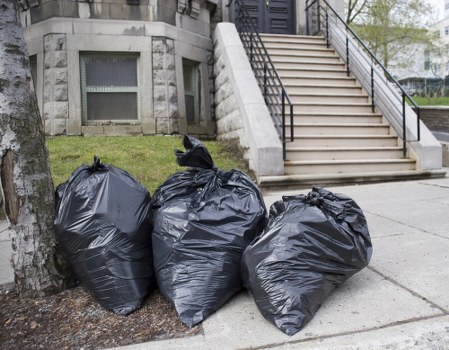
Three large black plastic rubbish bags filled with waste are placed in a row on the pavement beside a tree trunk in an outdoor urban environment. The bags are tightly knotted at the top and appear to contain household or waste materials, with some crinkling and slight bulging from the contents. They are positioned in front of a building entrance that features stone steps with metal handrails ascending alongside the doorway, leading to an upper level. The scene is illuminated by natural daylight, with shadows cast on the sidewalk. The surrounding area includes a well-maintained grassy patch land adjacent to the tree and the concrete pavement, typical of a residential or commercial street in Harrow. This visual accurately depicts common waste disposal practices in the area, which a rubbish removal service such as Flat Clearance Harrow might assist with, ensuring responsible rubbish collection and clearance for local businesses or homes within the postcode vicinity.

###

Choosing the Right Waste Removal Service in Harrow

Selecting the appropriate waste removal service involves considering several factors to ensure they meet your business's specific requirements:

  • Experience and Expertise: Look for providers with a proven track record in handling business waste similar to yours.
  • Range of Services: Ensure the service offers comprehensive solutions, including collection, recycling, and disposal.
  • Compliance and Certifications: Verify that the company adheres to all relevant regulations and holds necessary certifications.
  • Environmental Practices: Choose a provider committed to sustainable practices and reducing environmental impact.
  • Customer Support: Effective communication and responsive support are essential for seamless waste management.

Taking the time to assess these factors will help you partner with a waste removal service that aligns with your business goals and values.

Your choice of waste removal partner can significantly influence your company's operational efficiency and public image.
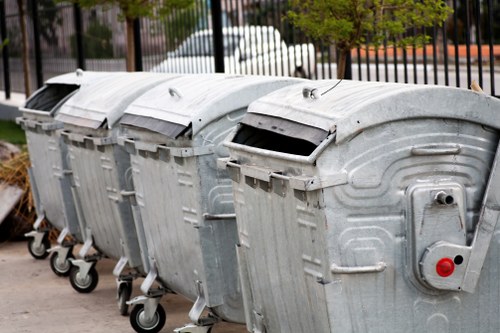
A row of four large, industrial metal wheelie bins lined up on a paved surface, each with a curved, silver-colored lid that is partially open. The bins are made of galvanized steel with visible ridges and a textured finish, and are equipped with black rubber wheels at the base for mobility. They are positioned outdoors, in front of a metal fence with vertical bars, with cars and trees visible in the background, suggesting a residential or commercial area within a town, likely near Harold. The bins are used for rubbish collection and disposal, and the image reflects a professional waste management service such as Flat Clearance Harrow. The lighting is natural, indicating daytime, and the overall scene emphasizes cleanliness and efficient waste handling facilities typical in urban environments regulated for rubbish removal services.

###

Benefits of Sustainable Waste Removal

Embracing sustainable waste removal practices offers numerous benefits for businesses in Harrow:

  1. Reduced Environmental Impact: Sustainable practices minimize pollution and conserve natural resources.
  2. Cost Savings: Efficient waste management can lower disposal costs and reduce the need for excessive waste production.
  3. Enhanced Reputation: Demonstrating a commitment to sustainability can improve your company's image and attract environmentally conscious customers.
  4. Regulatory Compliance: Adhering to sustainable practices ensures compliance with environmental laws and standards.
  5. Employee Satisfaction: A commitment to sustainability can boost employee morale and attract talent.

Investing in sustainable waste removal not only benefits the environment but also adds long-term value to your business.

Adopting eco-friendly waste management strategies positions your business as a responsible and forward-thinking enterprise.

A row of large, wheeled rubbish bins aligned outdoors on a paved surface, with green, yellow, and red lids, used for segregating waste. The bins are made of durable plastic with a matte finish and are set against a backdrop of greenery. The green-lidded containers are positioned towards the front, followed by yellow lids and then red-lidded bins further back, all arranged neatly in a straight line. The black wheels at the base of each bin are visible, and the bins are placed on a concrete or tarmac pathway with some small patches of moss or grass growing between the cracks. Natural daylight illuminates the scene, emphasizing the clean, solid colours of the lids and the smooth texture of the containers. This outdoor waste disposal setup reflects typical rubbish removal practices that a company like Flat Clearance Harrow might facilitate for local businesses around Harrow and the HA postcode area, ensuring clear separation and responsible disposal of waste materials.

###

Tailored Waste Solutions for Different Industries

Different industries generate unique types of waste, necessitating tailored removal solutions. Here are some examples:

  • Retail: Packaging materials, electronic waste from refurbished products, and general store waste.
  • Manufacturing: Industrial by-products, hazardous chemicals, and heavy machinery parts.
  • Healthcare: Medical waste, including sharps, used supplies, and biohazard materials.
  • Hospitality: Organic waste from food services, packaging waste, and general maintenance debris.
  • Construction: Concrete, wood, metals, and other building materials.

By understanding the specific waste profiles of different industries, waste removal services can provide more effective and compliant solutions.

Customized waste management strategies ensure that all waste types are handled appropriately and efficiently.

Four green wheeled rubbish bins with open lids are positioned side by side on a paved surface, with several tightly packed black rubbish bags of varying sizes and shapes stacked inside and partly spilling over. To the right, a black bin with a white label and a red lid is visible, also filled with waste. Behind the bins, a grey industrial building wall features a large metallic shutter door, partially open with white concrete blocks stacked nearby. The environment appears to be a commercial or industrial waste collection area, likely part of a local business premises, and the scene is evenly lit, suggesting daytime. The image reflects a typical rubbish removal setup, consistent with the waste management services provided by Flat Clearance Harrow, operating within the Harrow area.

###

Technology in Waste Management

Advancements in technology have revolutionized the waste removal industry, offering improved efficiency and sustainability:

  1. Automated Collection Systems: Streamlined operations through automated scheduling and routing.
  2. Recycling Technologies: Enhanced sorting and processing capabilities for various materials.
  3. Data Analytics: Tracking and analyzing waste generation patterns to optimize management strategies.
  4. Eco-Friendly Disposal Methods: Innovative approaches to reduce landfill dependency and promote recycling.
  5. Mobile Applications: Facilitating easy scheduling, tracking, and communication between businesses and waste removal providers.

Embracing technological advancements can lead to more efficient waste management processes and better environmental outcomes.

The integration of technology in waste removal enhances both operational efficiency and sustainability.

A row of four large waste collection vehicles parked outside an industrial building with green paneling. The vehicles are designed for rubbish removal and have a robust construction with hydraulic lifting mechanisms visible at the rear. The first vehicle is painted in green, while the remaining three are painted in a bright yellow colour, each featuring reflective safety markings along the lower edges. The ground surface is composed of compacted gravel or dirt, typical of a waste management yard. The background shows a section of the building's exterior wall, which has a small vent or window visible on the right side, and the overall atmosphere appears clear and bright, indicating daytime conditions. The scene demonstrates a professional waste collection operation, aligned with services offered by companies like Flat Clearance Harrow in the Harrow area, and the scene emphasizes the scale and infrastructure used in rubbish removal activities.

###

Cost Factors in Business Waste Removal

Understanding the cost dynamics of business waste removal can help you make informed decisions. Key factors influencing pricing include:

  • Volume of Waste: Larger volumes typically incur higher costs due to increased collection and disposal expenses.
  • Type of Waste: Hazardous or specialized waste may require additional handling and disposal measures, affecting overall costs.
  • Frequency of Collection: More frequent pickups can lead to higher costs but may be necessary for certain businesses.
  • Service Level: Comprehensive services, including recycling and site clean-up, may be priced higher than basic removal.
  • Distance: The proximity of the waste removal service to your business location can influence transportation costs.

By evaluating these factors, businesses can balance their budgetary constraints with their waste management needs effectively.

Transparent pricing structures from waste removal providers enable better budgeting and financial planning.

Three large black plastic rubbish bags filled with waste are placed in a row on the pavement beside a tree trunk in an outdoor urban environment. The bags are tightly knotted at the top and appear to contain household or waste materials, with some crinkling and slight bulging from the contents. They are positioned in front of a building entrance that features stone steps with metal handrails ascending alongside the doorway, leading to an upper level. The scene is illuminated by natural daylight, with shadows cast on the sidewalk. The surrounding area includes a well-maintained grassy patch land adjacent to the tree and the concrete pavement, typical of a residential or commercial street in Harrow. This visual accurately depicts common waste disposal practices in the area, which a rubbish removal service such as Flat Clearance Harrow might assist with, ensuring responsible rubbish collection and clearance for local businesses or homes within the postcode vicinity.

###

Regulatory Landscape for Waste Removal in Harrow

Navigating the regulatory framework is essential for businesses in Harrow to ensure compliance. Key regulations include:

  1. Environmental Protection Act: Governs the disposal and treatment of waste to prevent environmental degradation.
  2. Waste Electrical and Electronic Equipment Directive (WEEE): Targets the recycling and disposal of electronic waste.
  3. Control of Pollution (Waste) Regulations: Sets standards for waste management practices to minimize pollution.
  4. Landfill Tax Regulations: Imposes taxes on waste sent to landfills, incentivizing recycling and waste reduction.
  5. Health and Safety Regulations: Ensures safe handling and disposal of hazardous materials to protect workers and the public.

Staying informed about these regulations helps businesses avoid legal penalties and promotes responsible waste management.

Compliance with waste management regulations is fundamental to sustainable and lawful business operations.

A row of four large, industrial metal wheelie bins lined up on a paved surface, each with a curved, silver-colored lid that is partially open. The bins are made of galvanized steel with visible ridges and a textured finish, and are equipped with black rubber wheels at the base for mobility. They are positioned outdoors, in front of a metal fence with vertical bars, with cars and trees visible in the background, suggesting a residential or commercial area within a town, likely near Harold. The bins are used for rubbish collection and disposal, and the image reflects a professional waste management service such as Flat Clearance Harrow. The lighting is natural, indicating daytime, and the overall scene emphasizes cleanliness and efficient waste handling facilities typical in urban environments regulated for rubbish removal services.

###

Implementing a Waste Management Plan

Developing a comprehensive waste management plan can significantly enhance your business's efficiency and sustainability:

  • Assess Waste Generation: Identify the types and quantities of waste your business produces.
  • Set Reduction Goals: Establish targets to minimize waste generation through process improvements and resource optimization.
  • Choose Appropriate Disposal Methods: Determine the best methods for recycling, reusing, or disposing of different waste types.
  • Train Employees: Educate staff on proper waste segregation and handling practices.
  • Monitor and Review: Regularly evaluate the effectiveness of your waste management strategies and make necessary adjustments.

A well-structured waste management plan ensures that your business manages waste efficiently while meeting regulatory and sustainability goals.

A proactive approach to waste management can lead to significant environmental and economic benefits.

A row of large, wheeled rubbish bins aligned outdoors on a paved surface, with green, yellow, and red lids, used for segregating waste. The bins are made of durable plastic with a matte finish and are set against a backdrop of greenery. The green-lidded containers are positioned towards the front, followed by yellow lids and then red-lidded bins further back, all arranged neatly in a straight line. The black wheels at the base of each bin are visible, and the bins are placed on a concrete or tarmac pathway with some small patches of moss or grass growing between the cracks. Natural daylight illuminates the scene, emphasizing the clean, solid colours of the lids and the smooth texture of the containers. This outdoor waste disposal setup reflects typical rubbish removal practices that a company like Flat Clearance Harrow might facilitate for local businesses around Harrow and the HA postcode area, ensuring clear separation and responsible disposal of waste materials.

###

Case Studies: Successful Waste Removal in Harrow

Examining real-world examples can provide insights into effective waste management practices. Here are a couple of case studies from businesses in Harrow:

  • Retail Chain XYZ: By partnering with a local waste removal service, XYZ reduced their waste by 30% through improved recycling programs and waste audits.
  • Manufacturing Firm ABC: Implemented a comprehensive waste management plan that resulted in a 25% decrease in hazardous waste, ensuring compliance with environmental regulations.

These examples highlight the tangible benefits of professional waste removal services in optimizing waste management processes.

Successful waste removal strategies can lead to significant improvements in operational efficiency and sustainability.

Four green wheeled rubbish bins with open lids are positioned side by side on a paved surface, with several tightly packed black rubbish bags of varying sizes and shapes stacked inside and partly spilling over. To the right, a black bin with a white label and a red lid is visible, also filled with waste. Behind the bins, a grey industrial building wall features a large metallic shutter door, partially open with white concrete blocks stacked nearby. The environment appears to be a commercial or industrial waste collection area, likely part of a local business premises, and the scene is evenly lit, suggesting daytime. The image reflects a typical rubbish removal setup, consistent with the waste management services provided by Flat Clearance Harrow, operating within the Harrow area.

###

Future Trends in Waste Management

The waste management industry is continually evolving, with several trends shaping its future:

  1. Circular Economy: Emphasizing reuse and recycling to create a closed-loop system, reducing the need for new raw materials.
  2. Advanced Sorting Technologies: Utilizing AI and robotics to improve the accuracy and efficiency of waste sorting.
  3. Biodegradable Materials: Increased use of materials that can naturally decompose, minimizing landfill impact.
  4. Waste-to-Energy: Converting waste into usable energy through processes like incineration and anaerobic digestion.
  5. Smart Waste Management: Integrating IoT devices to monitor waste levels and optimize collection routes.

Staying abreast of these trends enables businesses to adopt innovative waste management practices that enhance sustainability and efficiency.

Embracing future trends in waste management can position your business as a leader in sustainability.

A row of four large waste collection vehicles parked outside an industrial building with green paneling. The vehicles are designed for rubbish removal and have a robust construction with hydraulic lifting mechanisms visible at the rear. The first vehicle is painted in green, while the remaining three are painted in a bright yellow colour, each featuring reflective safety markings along the lower edges. The ground surface is composed of compacted gravel or dirt, typical of a waste management yard. The background shows a section of the building's exterior wall, which has a small vent or window visible on the right side, and the overall atmosphere appears clear and bright, indicating daytime conditions. The scene demonstrates a professional waste collection operation, aligned with services offered by companies like Flat Clearance Harrow in the Harrow area, and the scene emphasizes the scale and infrastructure used in rubbish removal activities.

###

How to Get Started with Waste Removal Services

Initiating a partnership with a waste removal service involves several steps to ensure a smooth and effective collaboration:

  • Identify Your Needs: Determine the types and volumes of waste your business generates.
  • Research Providers: Look for reputable waste removal companies in Harrow with experience in your industry.
  • Request Quotes: Obtain detailed estimates to compare services and pricing structures.
  • Evaluate Services: Assess the range of services offered, including recycling options and emergency support.
  • Check References: Seek feedback from other businesses that have used the service to gauge reliability and quality.
  • Finalize Agreement: Ensure all terms, including service frequency and pricing, are clearly outlined in the contract.

Following these steps helps establish a strong foundation for effective waste management tailored to your business's specific needs.

Starting with a clear understanding of your waste management needs is essential for selecting the right service provider.

Three large black plastic rubbish bags filled with waste are placed in a row on the pavement beside a tree trunk in an outdoor urban environment. The bags are tightly knotted at the top and appear to contain household or waste materials, with some crinkling and slight bulging from the contents. They are positioned in front of a building entrance that features stone steps with metal handrails ascending alongside the doorway, leading to an upper level. The scene is illuminated by natural daylight, with shadows cast on the sidewalk. The surrounding area includes a well-maintained grassy patch land adjacent to the tree and the concrete pavement, typical of a residential or commercial street in Harrow. This visual accurately depicts common waste disposal practices in the area, which a rubbish removal service such as Flat Clearance Harrow might assist with, ensuring responsible rubbish collection and clearance for local businesses or homes within the postcode vicinity.

###

Common Challenges in Business Waste Removal

Managing business waste comes with its own set of challenges that businesses need to navigate effectively:

  • Regulatory Compliance: Keeping up with changing waste disposal laws and regulations can be complex.
  • Hazardous Waste Handling: Properly managing hazardous materials requires specialized knowledge and equipment.
  • Waste Volume Fluctuations: Seasonal or operational changes can cause variations in waste generation, complicating removal schedules.
  • Recycling Limitations: Not all materials are easily recyclable, and finding appropriate facilities can be challenging.
  • Cost Management: Balancing waste removal costs with budget constraints requires strategic planning.

Addressing these challenges proactively with the help of a professional waste removal service can lead to more efficient and compliant waste management.

Overcoming waste management challenges ensures smoother operations and better environmental compliance.

A row of four large, industrial metal wheelie bins lined up on a paved surface, each with a curved, silver-colored lid that is partially open. The bins are made of galvanized steel with visible ridges and a textured finish, and are equipped with black rubber wheels at the base for mobility. They are positioned outdoors, in front of a metal fence with vertical bars, with cars and trees visible in the background, suggesting a residential or commercial area within a town, likely near Harold. The bins are used for rubbish collection and disposal, and the image reflects a professional waste management service such as Flat Clearance Harrow. The lighting is natural, indicating daytime, and the overall scene emphasizes cleanliness and efficient waste handling facilities typical in urban environments regulated for rubbish removal services.

###

The Role of Training in Effective Waste Management

Educating employees on proper waste management practices is crucial for the success of any waste removal strategy:

  1. Waste Segregation: Training staff to separate different types of waste ensures effective recycling and disposal.
  2. Handling Hazardous Materials: Proper training minimizes the risk of accidents and ensures compliance with safety protocols.
  3. Minimizing Waste Generation: Encouraging practices that reduce waste creation can lead to significant cost and environmental benefits.
  4. Emergency Procedures: Preparing employees for handling unexpected waste-related incidents ensures swift and safe responses.
  5. Continuous Education: Regular training updates keep staff informed about the latest waste management practices and regulations.

Investing in employee training fosters a culture of responsibility and efficiency in waste management.

Well-trained employees are key to implementing effective and sustainable waste management practices.

A row of large, wheeled rubbish bins aligned outdoors on a paved surface, with green, yellow, and red lids, used for segregating waste. The bins are made of durable plastic with a matte finish and are set against a backdrop of greenery. The green-lidded containers are positioned towards the front, followed by yellow lids and then red-lidded bins further back, all arranged neatly in a straight line. The black wheels at the base of each bin are visible, and the bins are placed on a concrete or tarmac pathway with some small patches of moss or grass growing between the cracks. Natural daylight illuminates the scene, emphasizing the clean, solid colours of the lids and the smooth texture of the containers. This outdoor waste disposal setup reflects typical rubbish removal practices that a company like Flat Clearance Harrow might facilitate for local businesses around Harrow and the HA postcode area, ensuring clear separation and responsible disposal of waste materials.

###

Measuring the Success of Waste Removal Strategies

Evaluating the effectiveness of your waste removal strategies helps in identifying areas for improvement and ensuring ongoing compliance:

  • Waste Audits: Regular assessments of waste generation and disposal practices provide insights into efficiency and compliance.
  • Performance Metrics: Tracking key indicators such as waste reduction rates and recycling percentages measures the success of your strategies.
  • Cost Analysis: Monitoring waste removal costs against budgeted amounts helps in managing expenses effectively.
  • Employee Feedback: Gathering input from staff can highlight practical challenges and opportunities for enhancing waste management practices.
  • Compliance Checks: Ensuring ongoing adherence to regulations prevents legal issues and promotes responsible waste management.

By regularly measuring and analyzing these factors, businesses can refine their waste removal strategies for optimal performance.

Continuous evaluation ensures that waste management practices remain effective and aligned with business goals.

Four green wheeled rubbish bins with open lids are positioned side by side on a paved surface, with several tightly packed black rubbish bags of varying sizes and shapes stacked inside and partly spilling over. To the right, a black bin with a white label and a red lid is visible, also filled with waste. Behind the bins, a grey industrial building wall features a large metallic shutter door, partially open with white concrete blocks stacked nearby. The environment appears to be a commercial or industrial waste collection area, likely part of a local business premises, and the scene is evenly lit, suggesting daytime. The image reflects a typical rubbish removal setup, consistent with the waste management services provided by Flat Clearance Harrow, operating within the Harrow area.

###

Conclusion: Investing in Effective Waste Removal

Efficient business waste removal in Harrow is an essential component of sustainable and compliant business operations. By partnering with a professional waste removal service, businesses can ensure responsible waste management, reduce environmental impact, and maintain regulatory compliance.

Implementing a comprehensive waste management plan tailored to your business needs enhances operational efficiency and fosters a positive corporate image. Embracing sustainable practices not only benefits the environment but also contributes to long-term cost savings and business growth.

Don’t let waste management challenges hinder your business’s success. Contact us today to explore tailored waste removal solutions that meet your unique needs.

Invest wisely in waste removal to drive your business towards a sustainable and prosperous future.

Frequently Asked Questions

Top sustainable waste management practices for Harrow businesses include recycling programs, composting organic waste, reducing single-use plastics, implementing waste segregation, adopting digital documentation to minimize paper use, and partnering with local recycling and waste processing facilities.

Harrow businesses can reduce waste by conducting regular waste audits, optimizing inventory to prevent overstocking, encouraging reusable materials, implementing efficient production processes, offering digital alternatives to physical products, and educating employees about waste reduction strategies.

Businesses in Harrow have access to various recycling options, including recycling bins for paper, plastics, metals, and glass, electronic waste recycling services, confidential document shredding and recycling, and specialized recycling for specific industries such as construction or healthcare.

To implement a successful composting program, Harrow businesses should start by separating organic waste from other trash, provide designated compost bins, educate employees on proper composting practices, partner with local composting facilities or consider on-site composting solutions, and regularly monitor and maintain the compost system.

Adopting a zero-waste strategy can lead to reduced operational costs, improved brand reputation, compliance with environmental regulations, increased efficiency, and a positive impact on the local community and environment. It also encourages innovation and sustainability within the business.

Harrow businesses can manage electronic waste responsibly by partnering with certified e-waste recyclers, ensuring data is securely erased before disposal, donating or repurposing usable electronics, complying with local regulations for e-waste disposal, and educating employees about proper e-waste management practices.

Waste audits help Harrow businesses identify the types and quantities of waste they produce, pinpoint areas for waste reduction, evaluate the effectiveness of current waste management practices, and develop targeted strategies to enhance sustainability and efficiency.

Harrow businesses can engage employees by providing training and education on waste reduction, encouraging participation in recycling programs, offering incentives for sustainable practices, creating a culture of sustainability, and involving employees in decision-making processes related to waste management.

Harrow businesses must comply with local and national waste management regulations, which may include proper waste segregation, reporting hazardous waste, adhering to recycling mandates, following guidelines for e-waste disposal, and ensuring compliance with environmental protection standards.

Sustainable waste solutions can lead to financial benefits through reduced disposal costs, lower material costs by reusing and recycling, potential revenue from selling recyclable materials, tax incentives or grants for sustainable practices, and improved efficiency that can boost overall profitability.

Resources for Harrow businesses include local government programs, waste management consultants, online sustainability tools and platforms, industry associations, workshops and training sessions, and partnerships with local recycling and waste processing companies.

Technology can aid in waste management by providing tools for tracking and monitoring waste generation, automating waste sorting and recycling processes, offering data analytics to identify waste reduction opportunities, facilitating digital documentation to minimize paper use, and enabling efficient communication and training for employees.
Flat Clearance Harrow

Efficient business waste removal in Harrow ensures compliance, sustainability, and operational efficiency. Discover tailored solutions, benefits, and best practices for effective waste management.

Book Your Flat Clearance

Get In Touch With Us.

Please fill out the form below to send us an email and we will get back to you as soon as possible.